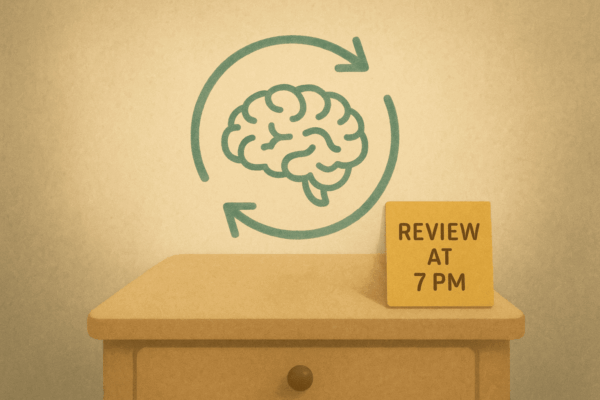
The Zeigarnik effect turns into a beautifully simple study method: work in focused bursts with strategic pauses. Start a task, pause intentionally while you’re still engaged, jot down your next tiny step, then return to pick up where you left off. The pause keeps the material active in your mind, while your written note ties up loose ends so nothing weighs on you.
The Psychology Behind It
Bluma Zeigarnik discovered that people remember unfinished tasks better than completed ones. With a working bookmark which is a simple note about what comes next, acts as your gentle nudge back to the work. This isn’t about leaving things half-done; it’s about creating purposeful pauses that enhance memory while keeping you organized.
The rhythm is straightforward: set your working bookmark, focus deeply, pause while you’re still warm, write your next tiny step, then return ready to dive back in, letting each short pass stack into lasting memory.
Putting It Into Practice Today
Transform your brain’s natural tendency to remember unfinished business into a study superpower. Start a task, pause deliberately while you’re still engaged, note your next small step, then circle back at a planned time and hit the ground running.
Language Learning: Use a vocabulary app for 10 new words but stop at 8. Write “finish last 2 words; create example sentences for both.” When you return, quiz yourself first, then check your answers.
Reading Comprehension: Studying an article or textbook chapter? Stop one paragraph before the end and note “finish final paragraph; write one-sentence summary.” You’ll be amazed how quickly everything comes back.
Networking: After meeting Sarah at the conference, jot “Sarah-blue jacket-marketing director at TechCorp.” Review it tonight to cement the memory for tomorrow’s follow-up.
The Science Check
The classic Zeigarnik effect research shows waiters remember unpaid orders more clearly than settled ones. A 2011 study in Psychological Science found that making a specific plan for unfinished goals prevents them from hijacking your attention, freeing up mental space for your current focus.
Common Questions Answered
Isn’t this just procrastination in disguise? Not at all. This creates structured work sessions. Each pause ends with a clear next step and a planned return time, keeping momentum alive.
How long should breaks be? Keep them short and purposeful. Try 25 minutes of work with 5-minute breaks, or 40 minutes with 10-minute pauses. Stop while you still have energy.
What makes a good working bookmark? Be specific: “solve equation 3,” “review final two flashcards,” or “add one supporting citation.” Concrete cues make reentry effortless.
What if open loops stress me out? Limit yourself to three active loops maximum. Keep a simple “Open Loop Register” listing the task, your next step, and when you’ll resume. This prevents anxiety from building.
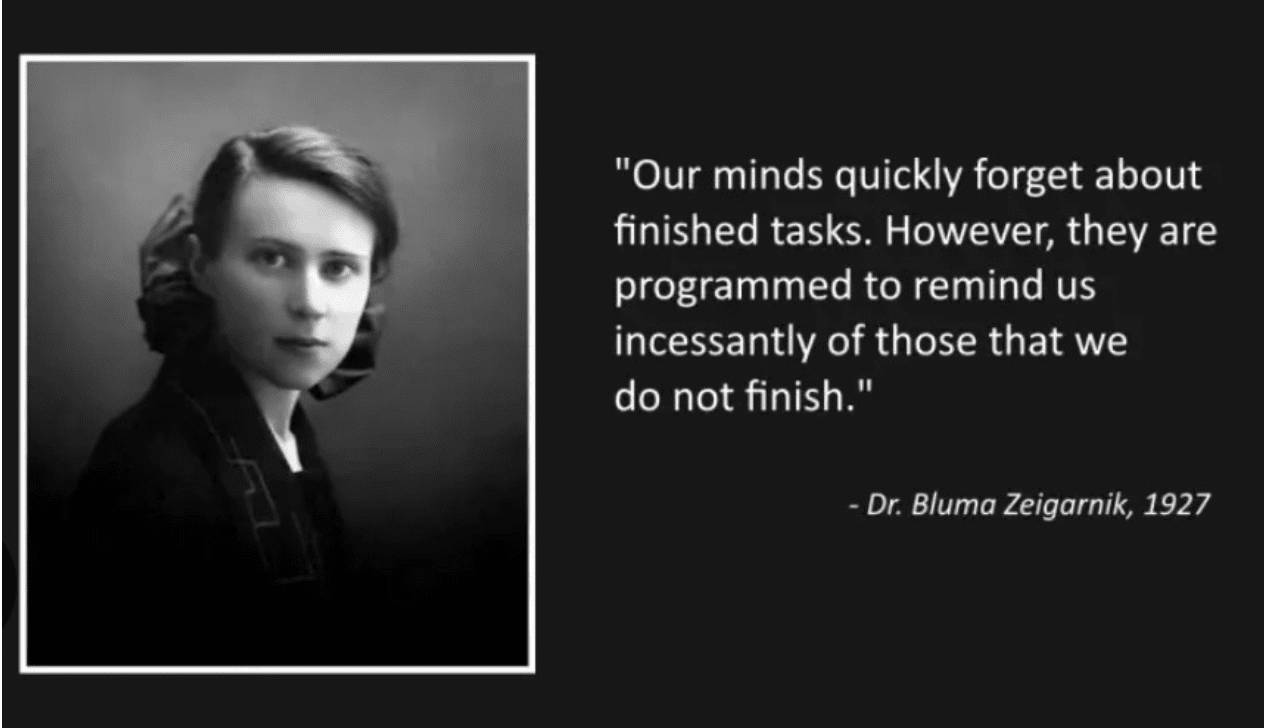
Subjects in the early experiments were stopped mid-puzzle or mid-arithmetic, then tested later. The interrupted tasks won the memory race.
How does this actually improve memory? The strategic pause keeps material active in your working memory, while your written cue provides psychological closure. When you return, recall kicks in faster, especially if you test yourself before peeking at your notes.
Can this help with procrastination? Absolutely. Starting something small breaks the initial resistance. Once a task is in motion, it’s much easier to continue later.
Making It Stick
End each session with intention. Write your next tiny step, schedule your return, then cleanly transition away. This isn’t quitting, it’s setting yourself up for success. The topic stays warm in your mind, you get genuine rest, and your work waits with the door slightly open.
Here’s a bonus insight from neuroscience: during breaks and sleep, your hippocampus ( the brain’s memory consolidation center ) replays recent learning, converting short-term memories into long-term storage. The Zeigarnik effect works perfectly with this natural process. Those strategic pauses and a good night’s sleep literally help your brain save your progress. Combine this with a quick self-quiz when you return, and your recall will soar.
Leave clear breadcrumbs, close your notebook, and rest easy. Let your hippocampus work the night shift while you claim your pillow. Tomorrow, even your pre-coffee self will find the trail and feel surprisingly sharp.